
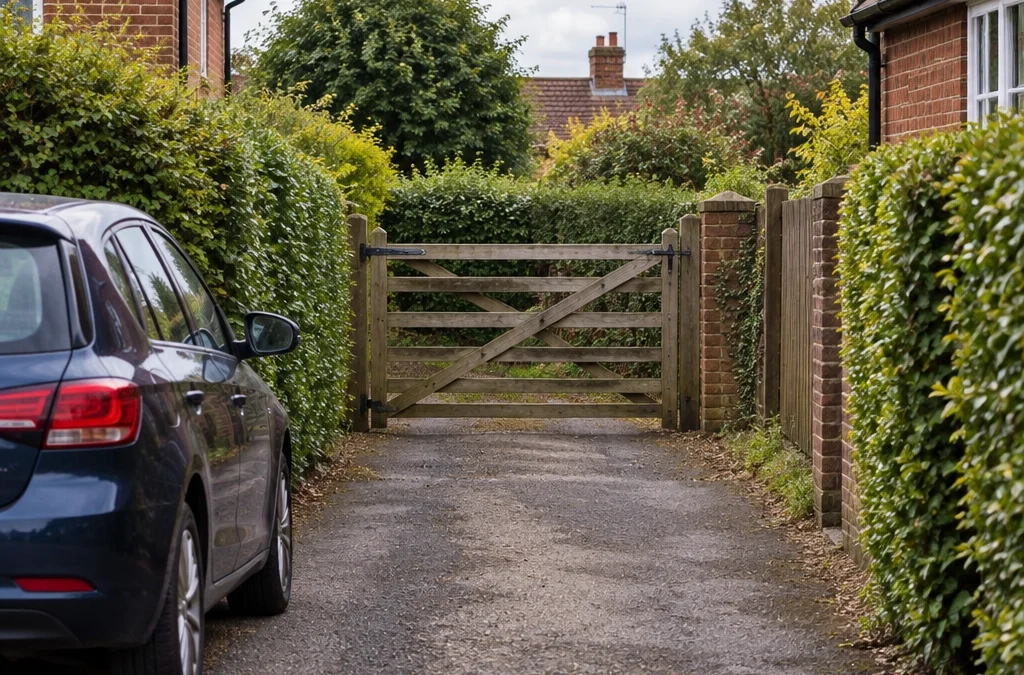
A right of way dispute can begin with something that looks minor: a locked gate, a parked van, a skip left across a driveway or a neighbour saying, “You cannot use this route anymore.”
At first, you may assume it will be resolved quickly. After three months, however, the route may still be blocked and everyday access to your home may be difficult. After six months, family relationships can become strained, correspondence can become hostile and uncertainty may begin to affect plans to sell, extend or refinance your property. After 12 months, you could face a deeply entrenched dispute, expensive litigation and a buyer asking difficult questions about access.
You do not need to accept unlawful obstruction. But you should also avoid taking matters into your own hands.
Early, proportionate advice can protect your position and may prevent a neighbourly disagreement from becoming a costly court battle.
Category: Dispute Resolution
What is a right of way?
A right of way is a legal right for one property owner to pass over another person’s land for a particular purpose. The property benefiting from the right is often called the dominant land, while the property affected by it is the servient land.
The right may allow you to:
- Walk over a path;
- Drive vehicles along a private road;
- Reach your home, garage or parking area;
- Move deliveries, equipment or machinery;
- Access part of your land that would otherwise be inaccessible.
The precise wording and history matter. A right to walk across a path does not automatically mean you can drive a car, park, run a business or use heavy vehicles over it.
The legal scope of the right depends on how it arose, what the deeds say and how the route has been used over time.
How can a right of way arise?
There are three common routes.
1. An express grant in the deeds
The right may be written into your conveyance, transfer or another deed. The wording might refer to a right of way over a driveway shown on a plan, or access over a defined route.
You should check both your title register and the documents referred to in it. The register may not contain the complete wording of the right, so you may need to obtain an historic conveyance or filed plan from HM Land Registry.
2. An implied right
In some circumstances, a right may arise by implication even though it is not clearly set out in a document. This can be legally complex and depends on factors such as the circumstances in which land was divided, the parties’ presumed intentions and whether access is necessary for the reasonable use of the property.
You should not assume that an implied right exists simply because a route appears convenient or has always been used.
3. A prescriptive right after long use
A right of way may sometimes arise through long use. The usual period is at least 20 years, and the use must generally have been:
- Open and visible;
- Continuous or sufficiently regular;
- Without force;
- Without secrecy; and
- Without permission.
These requirements are often summarised by the legal phrase “as of right”.
If you used the route because the neighbour expressly gave you permission, that may be a licence rather than evidence of a prescriptive easement. Similarly, use that was hidden, forced or repeatedly challenged may not count in the way you expect.
Twenty years of use is important, but it is not an automatic answer. The evidence, the identity of the landowners and the nature of the use all need careful consideration.
The Land Registry plan does not always settle the issue
Many homeowners look at their title plan and expect it to provide a definitive answer. Sometimes it does. Often, it does not.
A title plan is generally intended to show the general position of registered land boundaries. It is not necessarily a precise survey of the route, width or condition of a right of way.
A right may also exist even if it is not clearly marked on the plan. For example, a prescriptive right may have arisen through long use but never been formally registered.
HM Land Registry provides guidance on easements claimed by prescription in Practice Guide 52. You may need evidence such as statements of truth, statutory declarations, historic documents and photographs before the position can be properly assessed.
Do not rely on a coloured line on a plan alone. Read the register, obtain the documents it refers to and take advice if the wording is unclear.
Can a neighbour obstruct or overuse a right of way?
A neighbour must not substantially interfere with a valid right of way. A locked gate, permanent wall, parked vehicle or repeated obstruction may prevent you from using the right in practice.
The legal test is not always whether access is technically possible. The question may be whether the right can still be “practically and substantially exercised as conveniently as before.”
A minor inconvenience may not amount to unlawful interference. A complete blockage of a driveway is much more likely to be serious.
The opposite problem can also arise. The person using the right of way may use it excessively or outside its permitted scope. Examples might include:
- Turning a pedestrian right into regular vehicle access;
- Using a private route for commercial deliveries;
- Parking on the route;
- Increasing the intensity of use significantly;
- Allowing numerous unrelated people to use the access;
- Damaging the surface or failing to contribute to agreed maintenance.
A right of way is not an unrestricted right to use someone else’s land however you wish. If the use has changed, ask for advice before assuming that historical use covers the new activity.

Do not remove the gate or block the neighbour in return
You may feel justified in cutting a lock, removing a gate, moving a vehicle or placing your own obstruction across the neighbour’s access.
That can be a serious mistake.
Even if you believe you have a right of way, removing property yourself could lead to allegations of:
- Trespass;
- Private nuisance;
- Criminal damage;
- Harassment or threatening behaviour;
- Breach of an agreement or court order.
There are circumstances in which the law may recognise self-help remedies, sometimes described as abatement. However, the legal position is fact-sensitive and the risks are substantial if you have misunderstood the route, the extent of your right or who owns the obstruction.
A peaceful-looking dispute can quickly become two competing allegations: you say your access has been blocked, while the neighbour says you damaged their property.
Do not escalate the situation unnecessarily. Photograph the obstruction, keep communications calm and obtain advice before taking physical action.
What evidence should you gather?
Start creating a clear evidence file. This can make a significant difference if negotiations fail.
Collect:
- Your title register and title plan;
- The deeds or transfers referred to in the register;
- Historic plans and conveyances;
- Dated photographs of the route;
- A timeline showing how and when the route has been used;
- Details of the obstruction, including dates and times;
- Photographs showing the practical effect on access;
- Messages, letters or notices from the neighbour;
- Witness statements from previous owners, neighbours, family members or regular visitors;
- Evidence of whether the route was used on foot, by vehicle or for deliveries;
- Details of any previous objections or permissions.
Try to distinguish between what you personally remember and what another person can independently confirm. A witness who has lived nearby for many years may be particularly useful, provided their evidence is clear and reliable.
A practical route towards resolution
You do not necessarily need to begin with court proceedings.
Check the paperwork
Obtain the relevant title documents and identify exactly what they say. Note whether the right is for pedestrians, vehicles or a particular purpose.
Have a calm conversation if it is safe to do so
Ask why the obstruction has been placed. There may be a genuine concern about damage, parking, safety or maintenance. Understanding the reason may help you find a workable solution.
Write down the position
If the problem continues, send a calm written message or letter. Explain the history of use, the current obstruction and the effect it is having. Avoid exaggerated allegations and do not threaten court proceedings unless you are prepared to follow through.
Consider a land surveyor
If the disagreement concerns the route, width, turning area or boundaries, an appropriately qualified land surveyor may help clarify the physical position. A surveyor cannot decide the legal rights, but their evidence may assist with practical questions.
Suggest mediation
Mediation gives both sides an opportunity to discuss the dispute with an independent facilitator. It may help you agree:
- The route to be used;
- Gate arrangements;
- Access times;
- Maintenance responsibilities;
- Vehicle restrictions;
- A replacement or formal deed recording the agreement.
Mediation is not suitable for every situation, particularly where there is intimidation or an urgent need for an injunction. But where communication remains possible, it can be faster and less expensive than litigation.

When might court action be necessary?
If the neighbour refuses to remove the obstruction or denies that any right exists, you may need formal legal advice about:
- A declaration confirming that the right of way exists;
- An injunction requiring the obstruction to be removed;
- An order preventing future interference;
- Damages for loss or inconvenience;
- An application to register a proven prescriptive easement;
- A claim concerning unreasonable or excessive use.
An injunction is a serious remedy. The court will consider the evidence, the balance of convenience and whether damages would be an adequate remedy. In urgent cases, early advice is particularly important because delay can affect your position and increase costs.
Our dispute resolution solicitors can help you assess the practical options before positions harden. We can also advise on proportionate correspondence, mediation and potential litigation where negotiation has failed.
Whether you need a solicitor in Lincoln or a solicitor in Crowle, North Lincolnshire, we aim to give you clear answers without unnecessary legal jargon. We can arrange appointments around your schedule, including remotely where appropriate.
The value of taking advice early
The value is not simply in sending an aggressive letter. It is in understanding what right you have, what evidence supports it and which step is most likely to resolve the dispute at a sensible cost.
Early advice may help you avoid:
- Damaging an otherwise defensible claim;
- Making admissions in messages or conversations;
- Paying for unnecessary court applications;
- Escalating a neighbour dispute;
- Losing evidence about historic use;
- Discovering too late that your right is narrower than you assumed.
For a dispute resolution matter, our initial consultation costs a fixed fee of £175. This gives you an opportunity to explain the history, discuss your documents and understand the available options before deciding how to proceed.
If your right of way has been blocked, do not wait for a quiet dispute to become an expensive one. Gather your evidence, avoid retaliation and have a conversation with us about the most proportionate way forward.
Contact Tyto Law Solicitors to arrange an initial consultation.
About the author

Oliver Saxon, Principal Solicitor
Oliver Saxon is Principal Solicitor at Tyto Law Solicitors. He supports individual clients with clear, practical legal advice across dispute resolution, wills, Lasting Powers of Attorney, probate, employment and property matters.
Tyto Law Solicitors serves clients in Crowle, North Lincolnshire, Lincoln and beyond, with flexible appointments available in person, online or at a convenient location.
This article provides general information about rights of way and disputes under the law of England and Wales. It is not a substitute for advice on your particular circumstances. The outcome of any dispute will depend on the wording of the relevant documents, the evidence of use and the precise nature of the obstruction.