
You have done what you thought was necessary. Your mother made a property and financial affairs Lasting Power of Attorney (LPA). The Office of the Public Guardian (OPG) registered it. You are named as her attorney.
Yet the bank will not speak to you.
Bills are mounting. Direct debits may be at risk. You cannot access the account to pay for care, household costs or essential repairs. At an already distressing time, you are being passed between departments and asked for documents you thought you had already provided.
Do not ignore the problem.
After three months, unpaid bills, missed payments and avoidable charges may begin to accumulate. After six months, suppliers or creditors may become more persistent, and your mother’s finances may become harder to manage. After 12 months, a failure to act could contribute to serious financial loss, damaged credit arrangements or a lengthy legal dispute about what should have happened.
The good news is that a registered paper LPA normally gives an attorney authority to deal with the donor’s property and financial affairs. The challenge is proving that authority in a form the bank can verify and ensuring that you are acting within the document’s precise terms.
“Certified copies have the same legal authority as original documents.”
Office of the Public Guardian and UK Regulators’ Network guidance
Here are the most common reasons a bank may refuse to accept an LPA, and what you can do next.
The bank has only been shown an ordinary photocopy
A plain photocopy, photograph or scan is not necessarily enough.
The bank needs reliable evidence that:
- the LPA is genuine;
- it has been registered;
- you are named as an attorney;
- it is a property and financial affairs LPA; and
- you have authority to make the particular decision involved.
A registered paper LPA should show the relevant OPG validation mark or registration stamp. The bank may need to see the full document, not only the first page.
You can usually prove the LPA by producing:
- the original registered paper LPA;
- a properly certified copy; or
- an official office copy obtained from the OPG if the original has been lost or damaged.
The important distinction is between an ordinary copy and a certified copy. A certified copy confirms that it is a true and complete copy of the original document.
The certified copy has not been prepared correctly
A solicitor can certify a copy of a paper LPA. However, the certification must be completed properly.
The OPG guidance requires the appropriate certification wording to appear on each page. The certifier must sign and date every page. The final page must also contain the additional statement confirming that it is a true and complete copy of the LPA.
A bank may reject a copy if:
- some pages have not been signed or dated;
- the certification wording is incomplete;
- the copy does not include the whole LPA;
- pages are missing;
- the registration stamp or validation mark cannot be checked; or
- the person certifying the copy has not seen the original.
An attorney may be tempted to certify their own copy. That can create an obvious conflict of interest, and many banks will not accept an attorney-certified copy. Ask the bank what certification it requires, then arrange for the copy to be certified by a solicitor or notary if appropriate.
“There’s nothing in law that says you must see the original paper LPA.”
Office of the Public Guardian guidance
That does not mean every bank will immediately accept every copy. Providers carry out fraud and safeguarding checks. However, a properly certified copy should not be dismissed simply because it is not the original.

The LPA was never actually registered
Making and signing an LPA is not enough. A paper LPA must be registered with the OPG before it can be used.
This is one of the most serious and common misunderstandings.
If the form was completed but never sent for registration, you cannot rely on it to manage the donor’s bank account. The bank is entitled to refuse access because the document is not yet legally usable.
Check whether the document contains evidence of registration. If you cannot find the original, or you are unsure about its status, contact the OPG and ask it to confirm the position.
If the LPA was submitted but registration was refused, find out why. A refusal may relate to a missing signature, an incorrect date, an unsuitable witness, an incomplete section or a problem with an instruction.
The attorneys must act jointly
An LPA can appoint attorneys to act:
- jointly;
- jointly and severally; or
- jointly for some decisions and separately for others.
If attorneys are appointed jointly, they must agree and act together. One attorney cannot normally instruct the bank alone.
If the LPA appoints attorneys jointly and severally, one attorney may usually act without the other. However, the bank will still need to check the wording carefully.
The position can become complicated if:
- one joint attorney has died;
- one attorney has disclaimed their appointment;
- an attorney has lost capacity;
- an attorney has become bankrupt; or
- the LPA contains provisions about replacement attorneys.
The bank is not allowed to treat joint attorneys as if they were joint and several. It must follow the document as it is written.
The LPA contains an instruction or restriction
The donor may have included instructions or restrictions in the LPA. These are legally binding directions about how the attorneys must act.
For example, an LPA might say that:
- the attorneys must act together for a particular transaction;
- money must be held in a particular way;
- a named professional must be consulted;
- the LPA may only be used after the donor has lost mental capacity; or
- the attorney cannot make a particular type of decision.
A bank is entitled to check these provisions. If the transaction does not fall within the attorney’s authority, the bank may refuse it.
This is why submitting only the front page is risky. The wording that affects your authority may appear elsewhere in the document.
There are errors or handwritten alterations
Paper LPA forms must be completed carefully. Errors, crossings-out, handwritten alterations and inconsistent dates can cause registration problems or later delays with providers.
Do not assume that a small correction is harmless. A mistake in the donor’s details, attorney details, signatures, dates or witnessing may affect whether the document is valid.
If the form has not yet been registered, ask for advice before sending it to the OPG. The OPG may reject an incorrectly completed form, or it may need to deal with an invalid instruction in a particular way.
If the donor still has mental capacity, it may be possible to prepare a replacement LPA. The defective form should not simply be amended informally after signing.
If the donor has since lost mental capacity, they cannot make a new LPA. In that situation, the family may need to consider an application to the Court of Protection for a deputyship order. That is a longer and more expensive legal process, and it removes the donor’s ability to choose their own attorney.
The bank has safeguarding or fraud concerns
Banks have responsibilities to protect vulnerable customers. They may pause a transaction if they suspect:
- fraud;
- financial abuse;
- undue influence;
- a forged document;
- an attorney acting for their own benefit; or
- instructions that do not appear to be in the donor’s best interests.
A bank can carry out reasonable checks. It may ask for identification, contact the donor, check signatures or request further information about an unusual transaction.
However, a general suspicion does not give the bank permission to disregard a valid registered LPA indefinitely. The bank should explain what information it needs and why.
If the donor has lost capacity, the bank should not expect them to answer questions that they cannot reasonably answer. Mental capacity is decision-specific. Someone may lack capacity to understand one decision but retain capacity for another.
What you are legally entitled to do
A property and financial affairs LPA may allow you to:
- manage bank and building society accounts;
- pay household bills;
- deal with pensions, benefits and investments;
- manage insurance arrangements;
- handle tax matters;
- change utility arrangements; and
- deal with property, subject to the LPA’s terms.
You must act in the donor’s best interests, keep their money separate from your own and keep proper records. You must not use your position to benefit yourself improperly.
The LPA does not give you unlimited authority. You must read it carefully and follow every instruction or restriction.

How to push back if the bank is refusing the LPA
Ask the bank to confirm in writing:
- Exactly what document or information it says is missing.
- Whether it is refusing the LPA itself or only the copy provided.
- Whether it requires the original or will accept a solicitor-certified copy.
- Whether it has identified a restriction, joint appointment or safeguarding concern.
- What steps are needed to release funds and pay urgent bills.
Keep copies of every letter, email and form. Record the dates of telephone calls and the names of the people you speak to.
If the bank does not resolve the issue, make a formal complaint through its complaints process. Explain that the LPA is registered and that you have supplied the evidence required to prove your authority.
If you remain dissatisfied, you may be able to complain to the Financial Ombudsman Service. It deals with complaints where a financial business has refused to deal with a named attorney, been slow to recognise an LPA or made it unnecessarily difficult to access an account.
The Office of the Public Guardian can help with questions about registration and concerns about an attorney’s conduct. It may investigate suspected abuse or misuse of an LPA, but it does not generally decide ordinary disputes between an attorney and a bank.
The practical lesson: preparation matters
A registered LPA is not a magic key that every organisation will accept without checking. It must be completed correctly, registered properly and used within its limits.
That is why careful preparation matters. A badly completed paper form can result in delay precisely when your family needs to act quickly. It can lead to unpaid bills, blocked accounts, distressing correspondence and potentially expensive litigation.
At Tyto Law Solicitors, we help clients understand the decisions they are authorising, choose appropriate attorneys and prepare Lasting Powers of Attorney carefully. We provide clear advice without unnecessary legal jargon and can arrange appointments at your home, office or remotely, at a time that suits you.
We advise clients across Lincoln, Crowle and North Lincolnshire. Whether you need help preparing an LPA or are already facing difficulty with a bank, building society, pension provider or utility company, it is sensible to get advice before the problem escalates.
Our value is in asking the right questions at the outset, identifying restrictions that may cause difficulty and helping you protect your family from a future Court of Protection application.
If you would like to speak to a lasting power of attorney solicitor or an experienced private client solicitor, contact Tyto Law Solicitors on 01522 243467 for Lincoln or 01724 642842 for Crowle, or email info@tytolaw.co.uk.
Our initial consultation costs a fixed fee of £175. This initial consultation fee does not apply to Lasting Powers of Attorney, Wills or Probate matters. Have a chat with us and put your mind at rest before a document error becomes a family crisis.
About the author
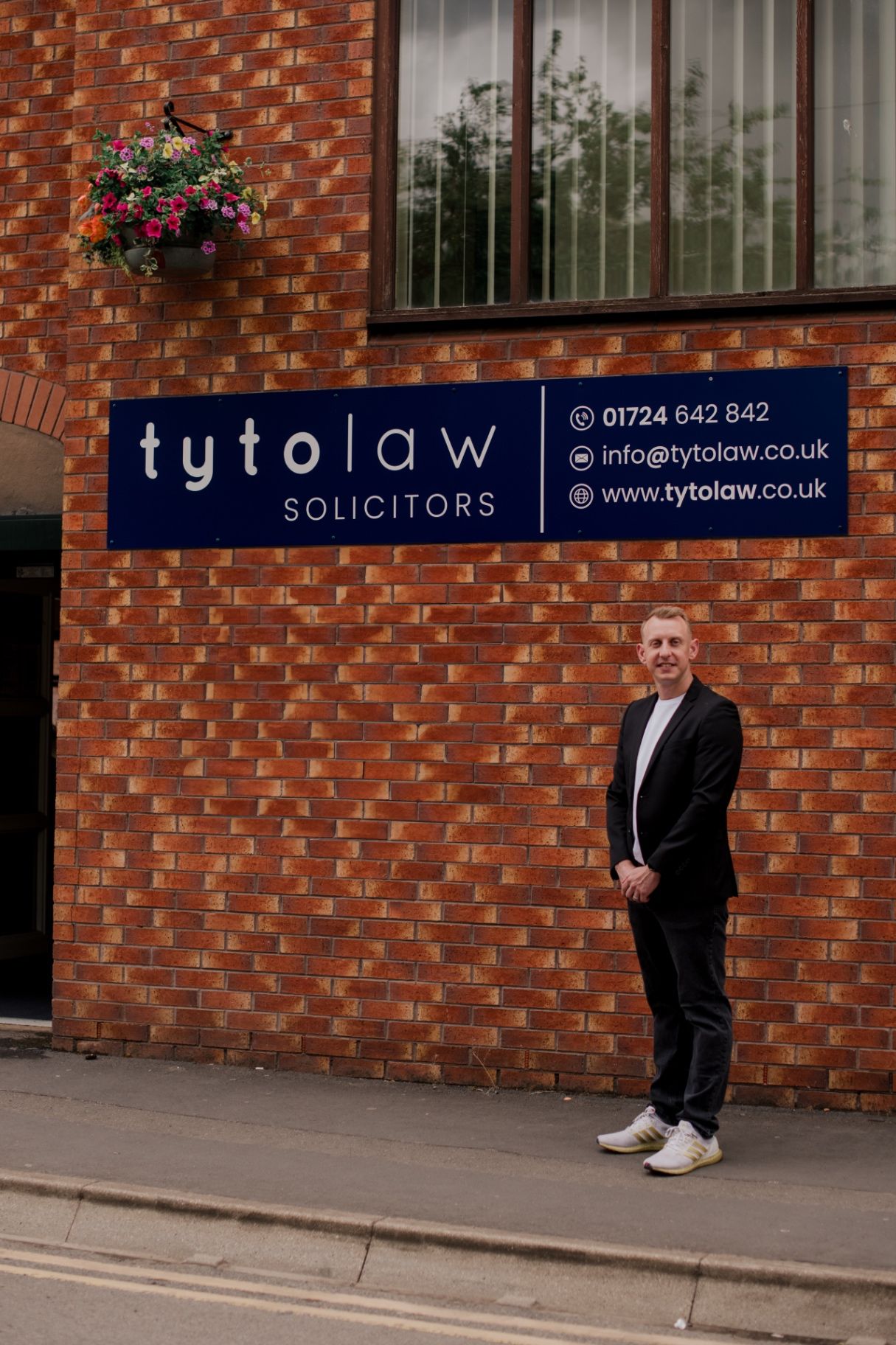
Oliver Saxon is the Principal Solicitor at Tyto Law Solicitors. Oliver advises individuals and families on Lasting Powers of Attorney, Wills, Probate and wider private client matters. He is committed to providing clear, practical legal advice that helps clients protect their finances, independence and loved ones.
Category: Lasting Powers of Attorney