

You may have made your Will carefully, signed it correctly and discussed your wishes with your family. Then, after your death, someone claims that you were not of sound mind when you signed it.
That allegation can place your loved ones in the middle of a distressing court battle.
If nobody investigates the concern now, the position can deteriorate quickly:
- After three months: family members may begin questioning the Will, contacting witnesses or placing pressure on the executors.
- After six months: important medical records, solicitor file notes and memories of conversations may become harder to obtain or interpret.
- After twelve months: the estate may be tied up in lengthy legal processes, with legal costs reducing what your family ultimately receives.
This is not intended to alarm you. It is intended to encourage sensible preparation.
The recent High Court decision in Ginger & Ors v Mickleburgh & Ors [2026] EWHC 100 (Ch) demonstrates that even where someone understood they were making a Will and knew broadly what they owned, the Will could still be declared invalid because delusions affected their decisions.
What did Ginger v Mickleburgh decide?
The case concerned a Will that excluded the deceased’s daughters and benefited other relatives. The evidence suggested that the deceased had developed fixed beliefs that his daughters were stealing from him and attempting to have him detained for financial reasons.
The court found that those beliefs were not supported by the evidence and were connected to a disorder of the mind. Crucially, the beliefs influenced the decision to exclude his daughters.
The Will was therefore set aside for lack of testamentary capacity. The deceased was treated as having died intestate. Intestacy rules are the legal rules that determine who inherits when a person dies without a valid Will.
The judgment is significant because the deceased appeared to understand some important matters. He understood that he was making a Will and had an understanding of his assets. However, that was not enough. The court also had to consider whether a mental disorder or delusion had affected the dispositions he made.
You can read more through the BAILII recent decisions service, using the citation Ginger & Ors v Mickleburgh & Ors [2026] EWHC 100 (Ch).
The four-limb Banks v Goodfellow test
The traditional legal test for testamentary capacity comes from Banks v Goodfellow. In practical terms, the person making the Will must:
- Understand that they are making a Will and what a Will does.
- Have a general understanding of the property they are disposing of.
- Understand the people who might reasonably expect to benefit from their estate.
- Not be affected by a disorder of the mind or an insane delusion that influences their decisions.
The fourth limb is often misunderstood. It does not mean that a person must have perfect memory, be free from every diagnosis or make decisions that other people consider sensible.
The question is whether a disorder of the mind or delusion affected the Will. The traditional wording asks whether the condition “poisons the affections” or “perverts the sense of right” and causes a disposition that would not otherwise have been made.
That distinction matters.
A diagnosis of dementia, depression, schizophrenia or another mental illness does not automatically mean that a person lacks testamentary capacity. Capacity is assessed at the time the Will is made and in relation to the particular decision.
Equally, someone can appear polite, conversational and capable of discussing their property while still being affected by a delusion that changes who they wish to benefit.
What does “delusion” mean in practice?
A mistaken belief is not necessarily a legal delusion.
People can make unusual decisions for many reasons. They may have fallen out with a relative, have strong personal values or simply prefer to benefit somebody else. The law does not require you to divide your estate equally or follow what your family considers “natural”.
A capacity challenge becomes more serious where the belief:
- is factually false;
- has no reasonable evidential basis;
- is fixed and resistant to explanation or contrary evidence;
- arises from a disorder of the mind; and
- caused, or materially influenced, the terms of the Will.
The final point is essential. It is not enough to show that a mental health condition existed. The challenger must connect the condition to the actual decisions in the Will.
For example, if a person believes without foundation that one child has stolen from them, and that belief is the reason the child is excluded, the connection may be important. If the person has a diagnosis but makes decisions for reasons unrelated to it, the outcome may be different.
Why are capacity challenges becoming more visible?
The population is ageing, and more people are making or updating Wills later in life. Some people make important changes after receiving a dementia diagnosis or while experiencing early cognitive decline.
That does not mean those Wills are invalid. It does mean that the circumstances surrounding instructions may be examined more closely, particularly where there is:
- a sudden change in beneficiaries;
- the exclusion of children or a long-term partner;
- a new beneficiary who has become involved late in life;
- a substantial gift to a carer or companion;
- disagreement within a second marriage or blended family; or
- a history of confusion, paranoia or serious mental illness.
Challenges may be raised by disappointed family members, children of a second spouse, alleged dependants or people who believe they were promised an inheritance. Carers may also become part of the factual background, although their involvement alone does not prove wrongdoing or invalidity.
A challenge is not automatically successful. It still requires evidence, and each case turns on its facts.

How can you protect your Will?
The best protection is not a dramatic statement in the Will. It is a careful process when instructions are taken.
Obtain medical evidence where there is a genuine concern
Where capacity may be questioned, it can be sensible to obtain medical evidence around the time instructions are given. This is sometimes known as following the “golden rule”.
A doctor’s opinion does not replace the legal test, but it can provide valuable contemporaneous evidence. It may help show what was understood at the time and whether a suspected illness was affecting the person’s decisions.
Use an experienced solicitor to take instructions
A professional will writer or experienced private client solicitor should take instructions directly from the person making the Will wherever possible.
The solicitor should explore:
- why the person wants to make or change the Will;
- who their family members and dependants are;
- whether anyone has influenced the decision;
- the nature and value of their assets; and
- whether the proposed gifts are consistent with their expressed reasons.
The solicitor’s file notes may become important many years later. Clear, contemporaneous notes can be far more helpful than a general statement that the client “appeared fine”.
Make sure the Will is correctly signed and witnessed
A Will must comply with the formal requirements of the Wills Act 1837. It should be signed by the testator in the presence of two witnesses, who then sign in the testator’s presence.
Witnesses should not be beneficiaries, or married to beneficiaries. A beneficiary who witnesses a Will may risk losing their gift, even though the rest of the Will may remain valid.
Correct witnessing will not cure a lack of capacity, but poor execution can create an additional route to challenge. Your solicitor should also retain a reliable record of how and when the signing took place.
Keep records and review the Will
Keep the original Will safely and make sure your executors know where it is. Keep relevant correspondence, medical evidence and notes together.
You should also review your Will after marriage, divorce, the birth of a child, a major change in assets or a serious change in health. A review does not necessarily mean changing the Will. It means checking that it still reflects your intentions.
Consider a carefully worded letter of wishes
A letter of wishes is not a substitute for a Will and is usually not legally binding. However, it may explain the reasons behind certain decisions.
It must be drafted carefully. An unnecessarily hostile or detailed letter can create more material for a future dispute. The aim should be to provide useful context without turning the letter into an accusation against family members.

What should you do if you are an executor facing a challenge?
Do not distribute the estate simply because the Will appears properly signed. Equally, do not assume that an allegation proves the Will is invalid.
You should:
- Obtain advice from dispute resolution solicitors or a contentious probate specialist.
- Preserve the original Will and all related paperwork.
- Locate the Will-drafting solicitor’s file and any medical evidence.
- Identify witnesses who can explain the deceased’s condition and wishes at the relevant time.
- Avoid making allegations or sending emotional replies to family members.
- Consider negotiation or mediation before the dispute develops into litigation.
- Take urgent advice if a caveat, court claim or request for information is threatened.
Early advice can help you understand whether the allegation concerns capacity, undue influence, fraud, improper witnessing or a claim for financial provision. These are different legal issues and require different evidence.
The value of resolving matters early is not just financial. A sensible dispute resolution strategy may help protect relationships, reduce uncertainty and keep more of the estate within the family rather than paying for a lengthy legal process.
Protect your wishes before a dispute begins
A properly prepared Will, supported by clear evidence of your capacity and intentions, can give your executors the best possible foundation if questions arise later.
At Tyto Law Solicitors, we help clients with making a Will, Will dispute resolution and related private client matters. We can also advise on Lasting Powers of Attorney, which allow you to choose who may make decisions about your finances, property or welfare if you lose capacity in the future.
Our team supports clients in Lincoln, Crowle and across North Lincolnshire. Appointments can be arranged at home, at work or online, including evenings and weekends where suitable.
The value of taking advice is the opportunity to ask the right questions, record your wishes properly and reduce the risk of your family being hit with avoidable legal costs later.
For dispute-resolution matters, the initial consultation costs a fixed fee of £175. This initial consultation fee does not apply to Wills, Lasting Powers of Attorney or Probate matters. We will explain the likely work and costs before proceeding.
If you are making a Will later in life, changing beneficiaries or concerned that a loved one’s Will may have been affected by illness, please contact Tyto Law Solicitors and have a conversation with us before the situation becomes a court dispute.
About Oliver Saxon
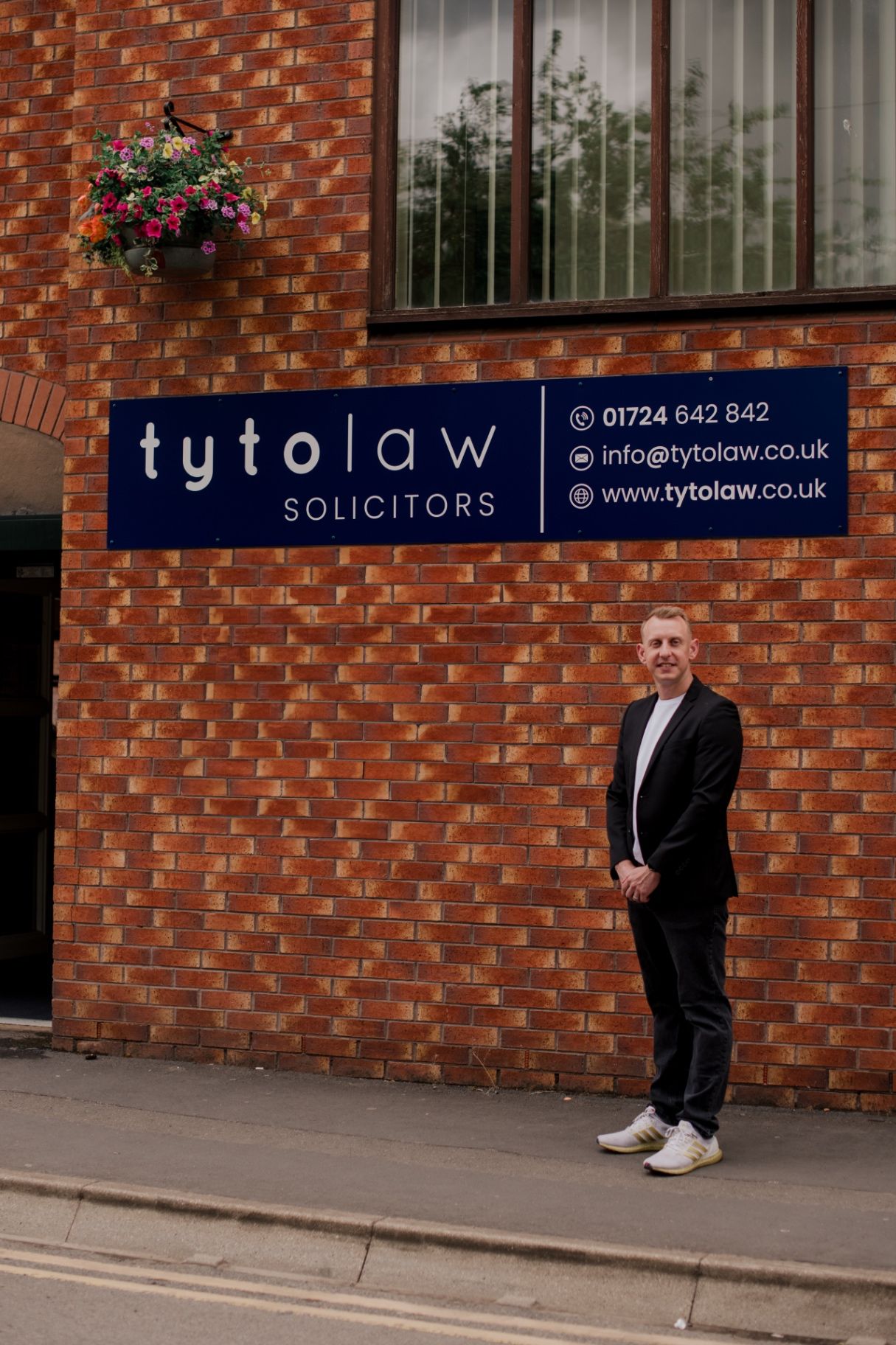
Oliver Saxon is Principal Solicitor at Tyto Law Solicitors, advising individual clients on Wills, Lasting Powers of Attorney, Probate and dispute resolution. Oliver takes a clear, practical approach to difficult legal issues and helps clients in Lincoln, Crowle, North Lincolnshire and surrounding areas understand their options without unnecessary legal jargon.