
Category: Dispute Resolution
You notice it while cutting the grass.
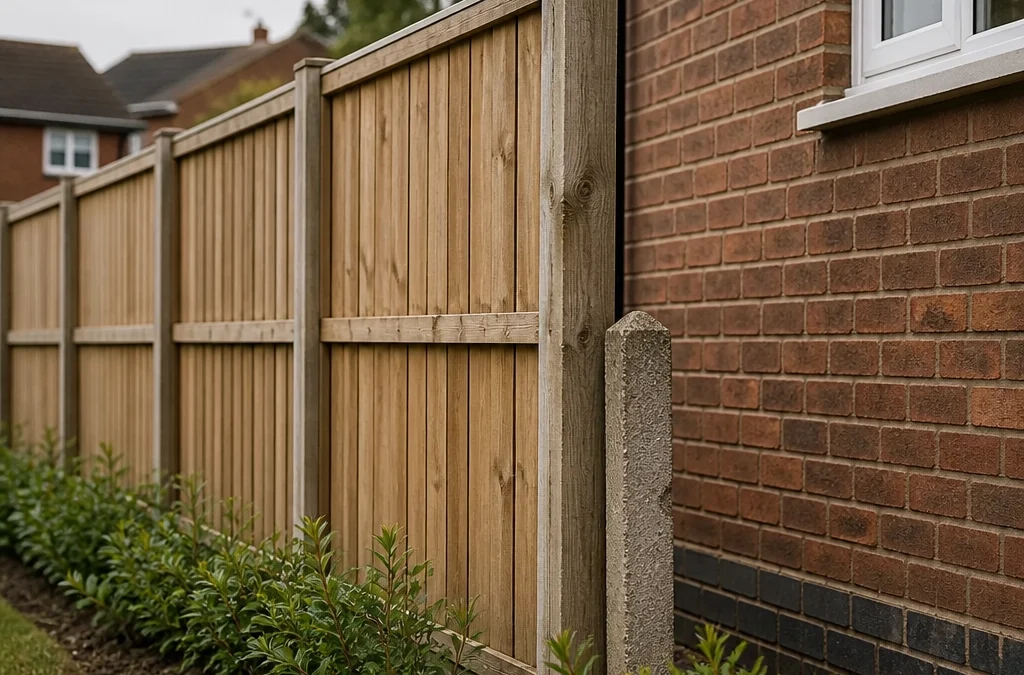
Your neighbour’s new fence appears to be a couple of inches over the boundary. It may only be a small strip of land, but suddenly the issue feels much bigger. You start wondering whether your neighbour has taken part of your garden, whether you should move the fence yourself, and whether this could end up in court.
If nothing changes, small problems like this rarely stay small.
In three months, your neighbour may simply assume you accept where the fence now stands. In six months, they may extend the fence line, plant up to it or landscape around it, making the position feel more fixed and much harder to challenge in practical terms. In twelve months, you may run into awkward questions when you try to sell your home, plan an extension or explain why a strip of land has been occupied for long enough to start mattering legally.
That is why acting early and calmly is often the cheapest step you can take.
Take a breath.
A fence being slightly over what you believe to be the boundary does not automatically prove that your neighbour has acted unlawfully. Property boundaries are often less precise than people expect, and an angry exchange or a DIY attempt to move the fence can quickly turn a manageable disagreement into a distressing and expensive dispute.
The good news is that you have options. The key is to establish the facts, keep communication calm and take sensible action before the disagreement becomes entrenched.
“The title plan proves exactly where the boundary is”
This is one of the most common misunderstandings in boundary disputes.
HM Land Registry title plans usually show the general position of a boundary rather than the exact line to the nearest inch. As the official guidance explains, “the title plan only shows the general position of the boundaries.” You can read the guidance on GOV.UK’s property boundaries page.
That matters when a fence appears to be two inches over the red line on a plan. The plan may not be sufficiently detailed to establish that level of precision. The legal boundary could be affected by other evidence, including:
- The wording in your title deeds.
- Historic conveyancing plans.
- The position of older fences, walls, hedges, ditches or posts.
- Physical features that have existed for many years.
- Previous agreements between owners.
- How the land has been occupied and treated over time.
A legal boundary is an invisible line. The fence is simply a physical feature which may, or may not, have been built directly on that line.
This is why a boundary dispute cannot usually be resolved by pointing at the red edging on a standard title plan and declaring the matter settled.
“It is only two inches, so it cannot be worth dealing with”
It may be a small measurement, but the consequences can still matter.
The disputed strip could affect your ability to build an extension, access part of your garden, maintain a wall or sell your home. If the fence is moved again, the disagreement may become harder to resolve. In some cases, a dispute over a narrow strip of land can also raise questions about long-term occupation, access rights or adverse possession.
More importantly, small disagreements can become personal very quickly. A conversation about a fence can turn into allegations about trespass, damage or bad faith. Once solicitors’ letters and litigation enter the picture, the legal costs may be many times greater than the value of the land being argued over.
That does not mean you should ignore the issue. It means you should deal with it proportionately and obtain advice before taking an irreversible step.
Start with documents, not accusations
Before approaching your neighbour, gather the information available to you.
Obtain an official copy of your title register and title plan. It may also be sensible to obtain the equivalent documents for your neighbour’s property, because relevant information can appear in one title but not the other.
Then look for older documents. These might include:
- The deeds from when you bought the property.
- Earlier plans supplied during a sale.
- Planning or building documents showing the historic layout.
- Written correspondence about the boundary.
- Photographs showing where an earlier fence or wall stood.
- Any boundary agreement made by previous owners.
Look closely at the wording rather than relying solely on symbols. T-marks, for example, may indicate responsibility for maintaining a boundary feature, but they do not necessarily prove who owns the land or where the legal boundary lies.
Do not assume that the fence belongs to the person who erected it. Do not assume that the side with the “better” garden-facing appearance owns it either. These may be clues, but they are not conclusive answers.

Speak to your neighbour before sending a threatening letter
If it feels safe and appropriate, begin with a calm conversation.
Your neighbour may not realise that the fence is disputed. They may have relied on an old fence line, a contractor’s assumption or information given when they bought the property. Starting with an accusation may make them defensive before either of you has properly checked the evidence.
You could say:
“I have noticed that the new fence may not follow the boundary shown in the documents. I do not want this to become an argument. Would you be willing to compare the plans and see whether we can establish what the position is?”
Keep the conversation focused on the boundary, not on personalities or past disagreements. Avoid saying that your neighbour has “stolen” land unless the position has been properly established. That kind of language rarely helps you reach a practical solution.
Afterwards, make a short written note of what was discussed. If you reach any provisional agreement, confirm it in writing without suggesting that the entire legal dispute has been resolved until the necessary documents have been prepared.
Do not move the fence yourself
This is important.
Even if you are convinced that the fence is over the boundary, do not remove, damage or relocate it without agreement or appropriate legal authority. You could be accused of trespass or damage to property. You may also destroy evidence about the fence’s position and make your neighbour less willing to negotiate.
Instead:
- Photograph the fence and surrounding features.
- Record measurements carefully, without disturbing anything.
- Keep copies of the relevant plans and deeds.
- Avoid carrying out landscaping or building work close to the disputed area.
- Communicate in writing if discussions become tense.
If the fence is creating an urgent problem: for example, blocking access, causing damage or interfering with planned work: get advice promptly. Waiting can make the practical and legal position more complicated.
A surveyor can provide the technical evidence
Boundary disputes often require more than a solicitor reading a title plan.
A chartered surveyor with experience in boundary matters can inspect the land, compare the documents with the physical features and prepare a report. That report may help you and your neighbour reach an agreement. If the dispute continues, it could also become important evidence.
It is usually best to understand the evidence before committing to a position. A surveyor may find that the boundary is not where either neighbour initially thought it was. That can be frustrating, but discovering the truth early is far better than building a case around an assumption.
A solicitor can help you identify what evidence is relevant, instruct an appropriate surveyor and explain the legal effect of the report.
Mediation is not admitting that you are wrong
If direct discussions fail, mediation may offer a way forward.
Mediation involves an independent mediator helping both sides explore the disagreement and negotiate a solution. The mediator does not normally decide who is right. Instead, they help you consider practical outcomes, such as:
- Agreeing the boundary line.
- Repositioning or replacing the fence.
- Sharing the cost of works.
- Granting a small strip of land by agreement.
- Agreeing future maintenance responsibilities.
- Recording the settlement formally.
A sensible compromise is not the same as admitting liability. You may decide that certainty, peace of mind and avoiding a lengthy legal process are worth more than insisting on every inch of land.
The RICS guidance on boundary disputes also highlights the value of taking early, informed steps before a dispute escalates.

When should you involve dispute resolution solicitors?
You should consider speaking to dispute resolution solicitors when:
- Your neighbour refuses to discuss the issue.
- You have received a solicitor’s letter.
- The fence affects building or access plans.
- Either side is alleging trespass or damage.
- The disputed land has significant value.
- You are considering removing or replacing the fence.
- Negotiations have broken down.
- You need a formal boundary agreement.
Early legal advice can prevent you from making an admission, sending an unnecessarily aggressive letter or spending money on the wrong application. We can review the documents, explain the strength of your position and advise whether negotiation, mediation, a formal agreement or court proceedings are appropriate.
If agreement cannot be reached, it may be possible to apply for a determined boundary through HM Land Registry. This process can be contested. In some cases, the courts or the First-tier Tribunal (Property Chamber) may ultimately need to determine the position. Litigation should generally be treated as a last resort because it can be costly, time-consuming and stressful.
A calm first step can protect your home and your finances
A boundary dispute does not need to become a neighbour war.
Start by gathering the documents. Do not move the fence. Speak calmly if you can. Consider a surveyor and mediation before the disagreement turns into formal litigation.
If you need help understanding your position, we can help you ask the right questions and choose a proportionate next step. Tyto Law Solicitors provides dispute resolution support for clients in Crowle, North Lincolnshire, and Lincoln, with appointments available in person, online or at a time that suits you.
For dispute resolution matters, our initial consultation costs a fixed fee of £175. This fee does not apply to Wills, LPAs and Probate.
You can contact our Lincoln office on 01522 243467, our Crowle office on 01724 642842, or email info@tytolaw.co.uk. If you are searching for a solicitor in Lincoln or a solicitor in Crowle, have a chat with us before the fence becomes the least expensive part of the dispute.
About Oliver Saxon, Principal Solicitor

Oliver Saxon is Principal Solicitor at Tyto Law Solicitors. Oliver advises individuals and families on practical legal solutions, including dispute resolution and property-related disagreements. He believes you should receive clear answers, straightforward communication and advice focused on protecting your position without unnecessary conflict.
This article provides general information about boundary disputes in England and Wales. It is not a substitute for advice on your individual circumstances.