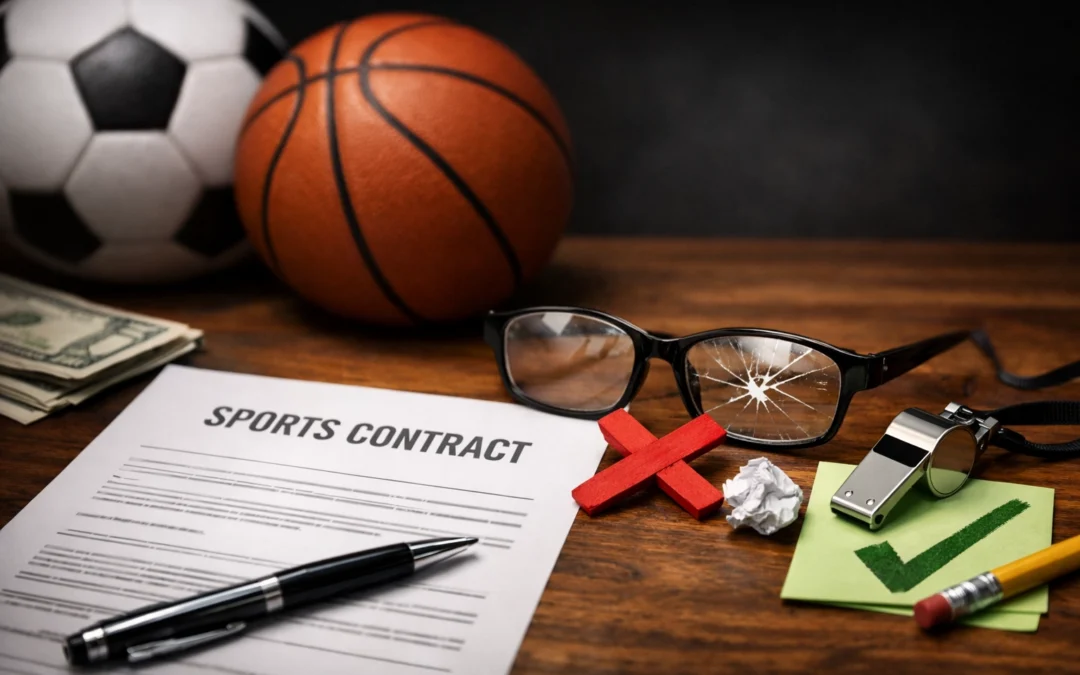
Getting offered a professional contract is one of the most exciting moments in an athlete's career. Whether you’re a rising star in football, a rugby pro, or making waves in the world of athletics, that piece of paper represents years of hard work, sweat, and sacrifice. It’s the "I’ve made it" moment.
But here is the reality: that same piece of paper can also become a cage if you aren’t careful.
In the world of sports law, we see it all the time. Athletes are so focused on the opportunity that they skim over the fine print. They trust the brand, the club, or the agent without questioning the "what ifs." This isn't just about missing out on a bit of extra cash; it’s about protecting your future, your reputation, and your freedom to move.
At Tyto Law Solicitors, we believe you shouldn’t need a law degree to understand your own career. We’re here to cut through the jargon and make sure you’re protected — whether you want to meet us in Crowle, North Lincolnshire, pop into our Lincoln office, or handle it all online.
Here are the seven most common mistakes we see athletes making with their contracts, and exactly how you can fix them.
1. Signing Without a Proper Review (The "Blind Faith" Trap)
The biggest mistake isn't a specific clause; it’s the act of signing itself. Many athletes feel pressured to sign quickly to show "commitment" or because they don’t want to seem "difficult."
We’ve seen contracts where compensation is listed as being at the "Company’s sole discretion." In plain English? They can decide to pay you £5 for ten hours of work if they feel like it. If you’ve already signed, your options for dispute resolution become much harder and more expensive.
The Fix: Never sign on the spot. A professional review is an investment in your career, not an unnecessary expense. At Tyto Law, we offer an initial legal review and advice session for a fixed fee of £175 (this fixed fee does not apply to Wills, LPAs, or Probate). You can speak to us in Crowle, North Lincolnshire, in Lincoln, or online. It gives you the chance to have an expert eye look over the document before you’re legally bound — a small price to pay to protect your earnings potential.

2. Handing Over the Keys to Your Brand
Your "Name, Image, and Likeness" (NIL) is your most valuable asset. It’s who you are. Unfortunately, many standard sports contracts include "catch-all" clauses that essentially give the company or club total control over your brand.
You might unknowingly agree to an unlimited number of social media posts, or worse, give them the right to use your face on any product they choose, even ones you don’t support, without paying you an extra penny.
The Fix: You need to be specific. Your contract should clearly state exactly what rights you are granting, which platforms they apply to, and for how long. You should always retain the right to "veto" any use of your image that contradicts your personal values or existing partnerships.
3. The Exclusivity Trap
Exclusivity sounds prestigious, but it can be a career-killer. We’ve seen "beverage" deals that were written so broadly they prevented an athlete from signing a deal with a snack company, simply because that snack company was owned by a rival drinks giant.
If your exclusivity clause is too broad, you are effectively closing the door on future income. You’re putting all your eggs in one basket, and if that brand decides to stop promoting you, you’re stuck.
The Fix: Narrow it down. Don’t just agree to "Exclusivity in the Food and Drink sector." Limit it to "Carbonated Soft Drinks" or "Energy Bars." Also, ensure the exclusivity has a clear geographic limit (e.g., just the UK) and a specific timeframe.

4. Ignoring the "Hidden" Costs
What you see on the headline of the contract isn't always what ends up in your bank account. We often find ambiguous terms regarding travel expenses, production costs, and tax responsibilities.
Imagine being told you’re getting £10,000 for a shoot, only to find out later that the company deducted £3,000 for your business-class flight and hotel. Or worse, finding out a year later that you owe a mountain of tax because the "gross" and "net" figures weren't clearly defined.
The Fix: Ask the awkward questions now so you don’t have to have the stressful conversations later. Require a written breakdown of who is responsible for what. If you are expected to travel, is there a per-diem? Is the company covering the tax at source, or is that on you? Getting this in writing saves you from a world of headache.
5. Giving Away Your Image… Forever
This is one of the scariest clauses in sports law: "Perpetual Rights."
If your contract says the company has the right to use your image "in perpetuity," it means they can use your face on billboards twenty years after you’ve retired. You won’t get paid for it, and you won’t be able to stop them. This can be a major problem if you want to sign a new deal with a competitor later in life.
The Fix: Every usage right should have an expiry date. Negotiate a "sunset clause" where the company must stop using your image within 6 to 12 months of the contract ending. You should also have a say in what happens to existing stock or marketing materials once the deal is over.
6. The Nightmare of "Clawback" Provisions
Transferring clubs or changing career paths is part of the game. However, some contracts include "clawback" provisions that require you to repay signing bonuses or previous earnings if you leave before a certain date.
These clauses are often designed to trap you. They can create a massive financial burden that makes it impossible for you to move to a better opportunity.
The Fix: If a clawback is unavoidable, it should be "pro-rata." This means if you leave halfway through a two-year deal, you only owe half the bonus back, not the whole thing. Better yet, we can help you negotiate termination terms that don't involve you writing a massive cheque to your former employer.
7. Being Stuck in a "One-Sided" Relationship
A contract is a two-way street, but many sponsors try to make it a one-way alleyway. They might include a clause that allows them to terminate the deal "at any time for any reason," while you are locked in for three years.
This leaves you with zero security. If you get injured or have a dip in form, they can walk away, leaving you with no income and a calendar full of cancelled appearances.
The Fix: Negotiate "mutual" termination rights. If they want the right to cancel, you should have it too. At the very least, ensure there is a "cure period" (usually 30 to 60 days) where you have the chance to fix any perceived issues before they can pull the plug.
Why Expert Advice Matters
Navigating the world of professional sport is hard enough without worrying about legal "snakes in the grass". A lot of athletes think you only speak to a solicitor when things have already gone wrong.
But the truth is, the best way to win a legal battle is to stop it from starting in the first place.
As Oliver Saxon, Principal Solicitor, puts it: "A bad contract is like carrying extra weight — you might not notice it on day one, but it will slow you down when it matters."
And one more that’s worth keeping in mind: "If it isn’t written down clearly, it usually won’t protect you when you need it."
We want you to focus on your performance. If you’re looking at a playing contract, sponsorship agreement, image rights deal, or a settlement offer after a fallout, we’ll guide you through it in plain English — from our offices in Crowle, North Lincolnshire and Lincoln, or online.
Let’s Get You Protected
At Tyto Law Solicitors, we pride ourselves on being friendly, approachable, and, most importantly, jargon-free. We won’t hide behind complicated Latin phrases. We’ll tell it to you straight.
If you’ve got a contract sitting on your desk — or you’re worried about a deal you’ve already signed — don’t leave it to chance.
For a fixed fee of £175, we can provide an initial consultation to review your situation and give you clear, actionable advice. (This fixed fee does not apply to Wills, LPAs, or Probate services.)
You can meet us in Crowle, North Lincolnshire, visit our Lincoln office, or speak to us online — whatever is easiest for you.
Don’t wait until you’re "hit with a bill" or stuck in a "distressing court battle". Let’s have a chat and put your mind at rest.
Contact Tyto Law today to book your £175 consultation. Let’s make sure your next big win stays a win.